
Key Stuck in Lock or Won't Turn? Check the Key First
When a key goes into a lock and will not turn, or turns and then will not come out, the key is the first suspect. A lookalike key from the same ring, a worn copy or a badly cut new one accounts for a lot of these. After that comes a dry or dirty cylinder, then cold weather, then a lock that someone else has changed. Try your spare, check the key for bends, and if the lock feels gritty, puff in graphite or a dry PTFE lock lubricant. Do not use oil, and do not turn the key with pliers.
Start with the key
A lot of "broken lock" moments turn out to be key problems. Rule them out before you blame the cylinder.
- Is it the right key? House keys from the same brand look alike, and a ring with a front door key, a back door key and an office key is easy to mix up in the dark. Read the brand on the key head and the lock face.
- Does the spare work? If an older original turns the lock and your everyday key does not, the everyday key is the problem. Keys wear down, and a copy made from a worn copy carries the wear forward each time.
- Is the key new? A freshly cut copy that will not turn was probably cut a little off. Take it back to whoever cut it, along with the original.
- Is it bent? Hold it up and sight along the blade. A slight bend is enough to stop the pins lining up.
- Is it all the way in? A key that stops short of the shoulder leaves every pin at the wrong height. Dirt in the keyway or a burr on the key can stop it seating.
If a different key works, get a new one cut from the good original or from the key code, not from the worn copy.
When the cylinder is the problem
If no key you own will turn it, look at the lock.
Dry or dirty pins
Inside the cylinder, small spring-loaded pins have to drop and rise freely. Dust, pocket lint and old lubricant slow them down until the key will not turn. The fix is a dry lubricant: a puff of graphite powder or a dry PTFE lock spray into the keyway, then slide the key in and out and turn it gently several times to work it through. Skip household oil and grease. They feel like a fix for a week, then collect grit and make the pins stickier than before. Our post on salt air and Mamaroneck door locks covers cleaning a cylinder that has been through salt water or flooding.
Worn pins and plug
On an old lock, the pins and the plug they sit in wear along with the key. The giveaway is a lock that only turns if you pull the key out a fraction, or lift it while turning. Lubricant helps for a while. The real fix is a cylinder repair or a new cylinder.
A broken spring or pin
If the key used to turn and now stops dead at the same point every time, a pin may be stuck up in its chamber because a spring has broken. That is a job for a locksmith, since the cylinder has to come out and be opened.
It turns with the door open
If the key turns smoothly with the door open but sticks with it closed, the lock is fine and the door is the problem. The bolt is pressing against the strike, and the key cannot overcome it. Our post on a deadbolt that will not lock or turn walks through that diagnosis.
Cold weather and frozen locks
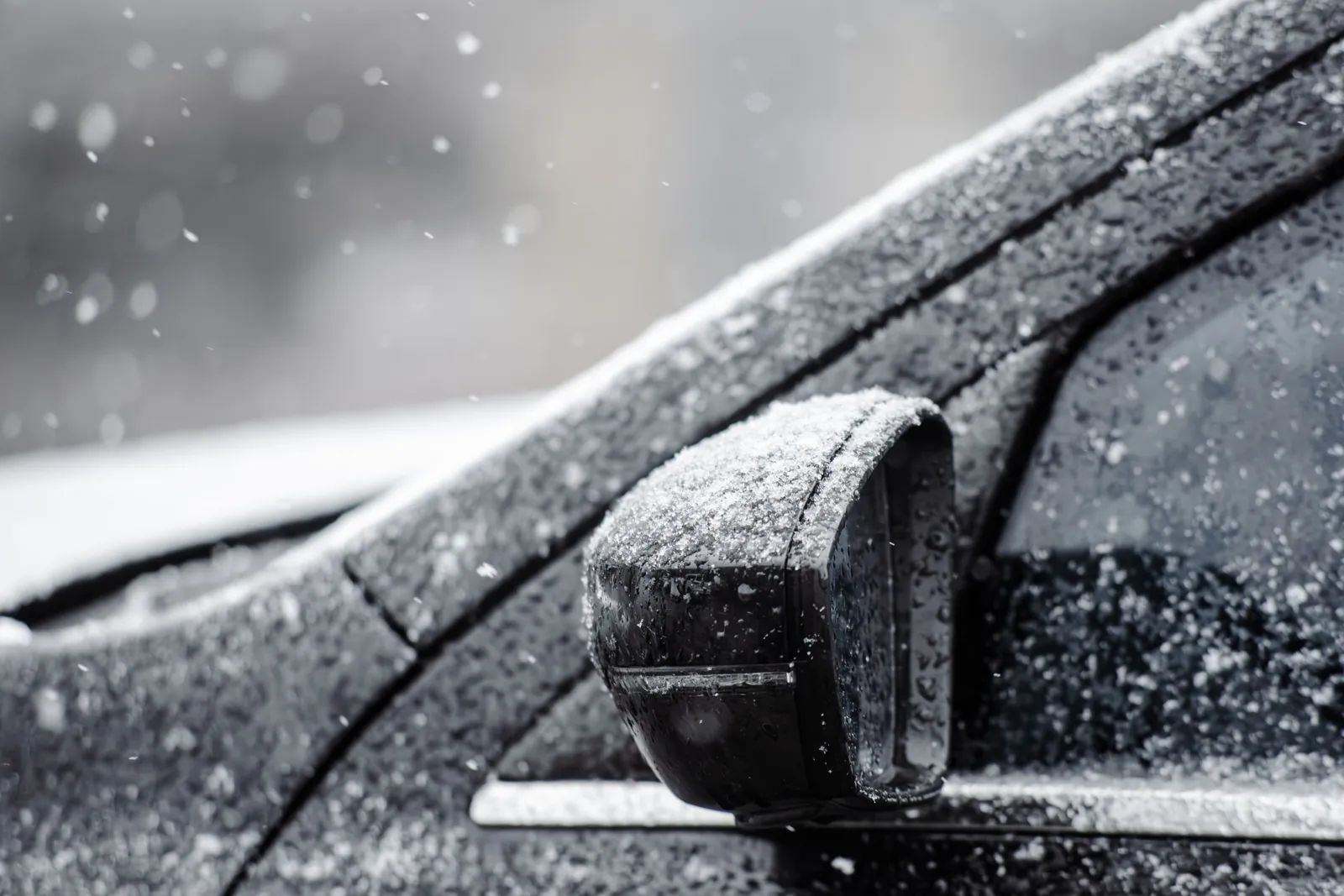
Westchester winters freeze, and water that gets into an outdoor cylinder can freeze around the pins. The key goes in, but nothing moves. A lock de-icer made for the purpose works, and so does warming a plain metal key in your hand before trying again. Do not pour hot water over the lock. It runs into the cylinder and refreezes, usually worse than before. Once it thaws, dry lubricant helps keep water from sitting in the pins next time.
When the key will not come out
A key can only come out of a pin tumbler lock when the plug is back in the position where the key went in. That is when the cuts on the key sit under the pins and let them drop.
- Turn the key back to where it started. On most front doors that is with the key upright. A key that is turned even slightly off that point will not slide out.
- Hold it there and wiggle gently while pulling straight out. Small up-and-down movement lets the pins settle.
- Puff in dry lubricant if it still holds. Then try again.
What not to do: twist the key with pliers, rock it side to side hard, or hang your weight off it. A key that is stuck and then forced is how a stuck key becomes a broken one, and our guide to a key broken off in a door lock explains why that turns a simple job into an extraction. A heavy bunch of keys hanging off the one in the lock also wears the cylinder over time, so keep the ring light.
A lock that has been changed
In apartments and co-ops, a key that suddenly stops working is sometimes not a fault at all. The building may have rekeyed or replaced the cylinder, for example after a lost master key, and the notice went to the wrong place. If your key went in fine yesterday and today it will not even enter, ask the management office or the super before anyone works on the lock. It is their cylinder, and they may have your new key.
Eastchester calls
The Town of Eastchester takes in the villages of Bronxville and Tuckahoe as well as unincorporated Eastchester. That means a mix of older houses with original mortise locks and apartment and co-op buildings near the Tuckahoe station, and both kinds of lock end up with stuck keys. Our third technician lives at the edge of the Bronx, which puts him close to Eastchester. For more on the area, see our Eastchester locksmith page.
Larchmont Locksmith NY repairs sticking cylinders and replaces worn ones as part of our residential lock service. Service starts at $125, and you can call any hour.
Frequently asked questions
Is WD-40 good for a key that will not turn?
It can free a lock that has just been soaked, because it pushes water out. As a regular lubricant it attracts dust and gums up the pins over time. Graphite powder or a dry PTFE lock lubricant is the better choice for a sticking cylinder.
Why does my new key copy not work when the original does?
The copy was probably cut slightly off, or copied from a worn key instead of the original. Take both keys back and ask for a new copy cut from the original or from the key code.
My key turns halfway and stops. What is wrong?
If it stops at the same point with the door open, a pin or spring inside the cylinder may be broken, or the bolt mechanism is binding. If it only happens with the door closed, the bolt is catching on the strike. Either way, stop forcing it.
Can a locksmith get a stuck key out without damaging the lock?
Usually, yes. Once the plug is back in its starting position, a stuck key can normally be worked free. Damage tends to come from forcing the key first, so the earlier you stop, the better.
Key will not turn and you are stuck outside? Call Larchmont Locksmith NY at (914) 255-6611.