Key Broke in Your Door Lock? What to Do and What to Skip
If your key broke off in the door lock, stop turning it, keep the half you are holding, and leave the stub alone unless a clear piece sticks out far enough to grip and pull straight back. Do not push it deeper, do not glue anything to it, and do not try a spare key on top of it. A locksmith slides thin extraction tools alongside the stub and draws it out, and most of the time the lock is fine afterwards. If the door is now locked with you on the wrong side of it, you also have a lockout, and that is the call to make first.
Work out what kind of problem you have
A snapped key is one of three different situations, and they are not equally urgent.
- The door is open or unlocked and you are inside. There is no rush. Leave the jammed lock alone, use another lock on the door if there is one, and arrange to have the stub removed.
- The door is locked and you are outside. That is a lockout with a broken key in it. Try the other doors before anything else. Our guide to being locked out of a house has the order for checking doors and finding a spare.
- The key broke in a lock you rely on overnight, such as the only deadbolt on a back door. You may be able to close the door but not lock it. That is worth sorting out the same day.
Knowing which one you are in tells you whether this is a quick daytime fix or an emergency lockout call.
What to do in the first few minutes
- Stop turning. Twisting a stub can bend the pins in the cylinder or wedge the broken piece tighter.
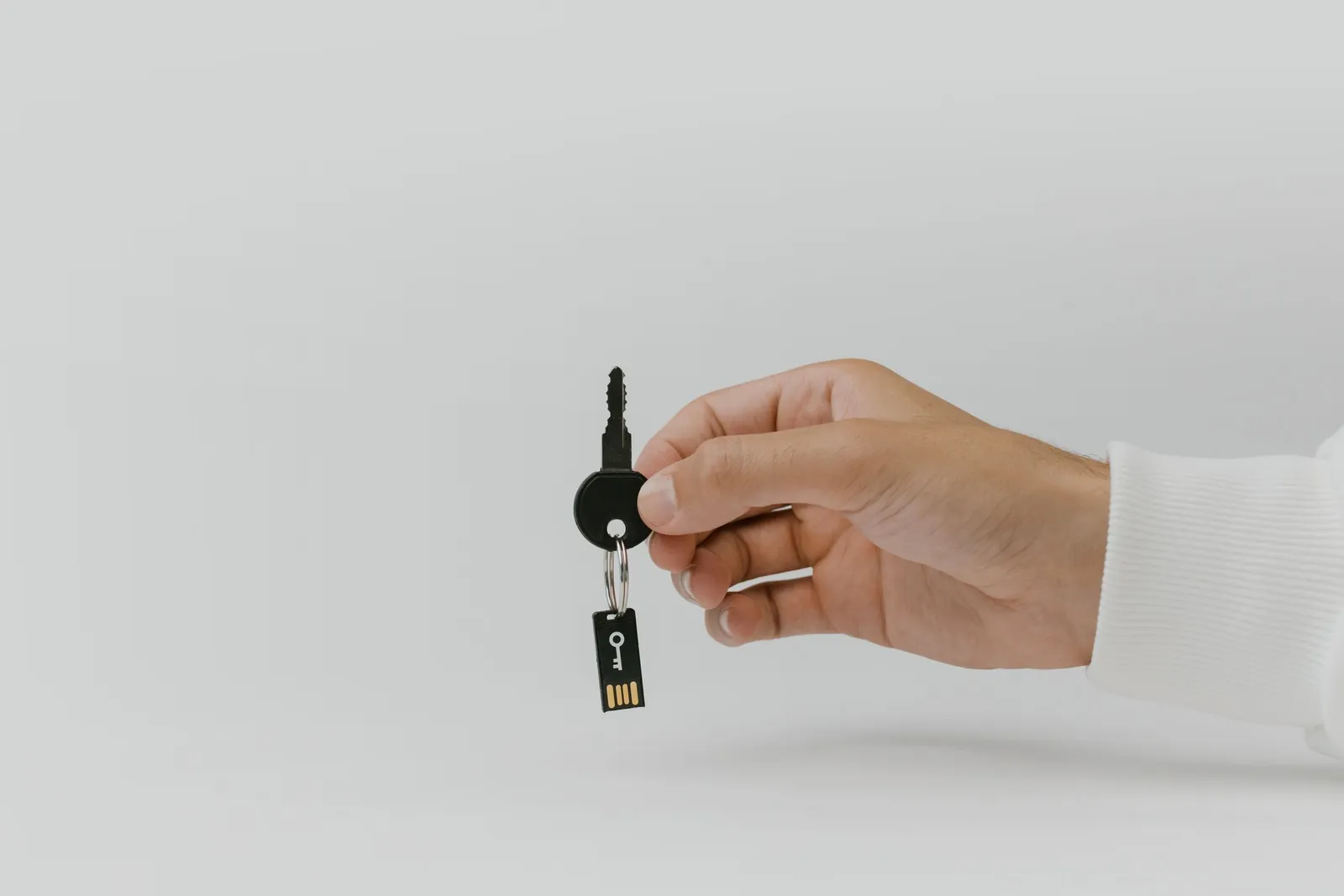
- Keep the broken half. Put it in a pocket or an envelope. If both pieces survive, a locksmith can often cut a new key from them.
- Look before you touch. Shine a phone light into the keyway. If a good length of the blade sticks out past the face of the lock, grip it with needle-nose pliers or tweezers and pull straight out, without twisting.
- If the stub is flush or below the face, stop. Anything you can fit in beside it will usually push it further in.
That is the whole safe DIY list. A gentle straight pull on a piece you can see is fine. Everything past that tends to turn a simple extraction into a damaged cylinder.
What not to try
The internet has a lot of advice for broken keys. Most of it costs people a lock.
- Superglue on a matchstick or the broken half. The glue runs into the keyway, sets around the pins and fixes the plug in place. A stub that would have come out cleanly becomes a cylinder that has to be replaced. Never glue anything to a broken key.
- A paper clip, hairpin or small screwdriver. These rarely catch the stub. They push it deeper, scratch the plug, or snap off a second piece next to the first.
- The spare key. Pushing another key in on top of the stub jams both.
- Household oil. It does not loosen the stub and it leaves the keyway coated in something that collects dirt.
- A drill. Drilling a lock open is a last resort for a professional, not a first step, and it destroys the cylinder.
How a locksmith gets it out
A typical extraction call looks like this. First the technician checks the position of the plug, the part of the cylinder that turns. A key can only come out when the plug is back where the key went in, with the cuts lined up under the pins. If the key snapped halfway through a turn, the plug is rotated back first with a thin tension tool.
Then one or two extractor blades, thin strips of hardened steel with tiny hooks, slide in alongside the stub. The hooks catch the cuts on the key blade and draw the piece out. On a stubborn stub, the cylinder may be taken out of the door so the plug can be opened on a bench.
Once it is out, the lock gets tested with your spare. If the spare works smoothly, the job is done. If both halves of the broken key are intact, they can usually be lined up and used to cut a new working copy.
Why keys break, and what it says about the lock
Keys rarely snap for no reason. The usual causes:
- An old, thin key. Brass wears. A key that has been carried for years and copied from copies gets weaker at the shoulder, where the blade meets the head.
- A key used as a handle. Pulling a door shut by the key bends it a little every time.
- A bent key straightened by hand. It looks fine and then fails.
- A lock that needs force. This is the one to pay attention to. If you were leaning on the key to make it turn, the key was the weak link in a lock or door that was already binding.
When force was involved, getting the stub out is only half the job. A stiff cylinder or a bolt dragging against its strike plate will break the next key too. If the key turned freely with the door open and fought you with it shut, the door or the strike is out of line, and that needs adjusting. If it fought you either way, the cylinder itself needs attention.
Does the lock need replacing after a broken key
Usually not. A clean extraction leaves the cylinder exactly as it was. A lock is more likely to need work when the stub was forced in deeper, when someone tried glue or a drill, or when the plug no longer turns smoothly with a good key.
At that point the choice is the usual one: repair or rekey the existing cylinder, or replace the lock. Our guide to rekeying versus replacing a lock sets out how to decide. If the key broke because the lock was worn out, replacing it is often the better money. Larchmont Locksmith NY repairs and replaces house locks as part of our residential lock work.
Houses and apartment towers in New Rochelle
New Rochelle has both, and the broken key plays out differently in each.
In a house, the lock is yours and the decision is yours. In one of the newer high-rise buildings downtown, talk to the management office or the super first. The cylinder on your apartment door may be part of the building's master key system, the building may already have a spare key, and many buildings have rules about who can work on an apartment entry lock. A cylinder the building controls should not be drilled or swapped without its say.
Two of our technicians live in Larchmont, right next door to New Rochelle, and the third lives at the edge of the Bronx, which puts him close to New Rochelle as well. Average response is about 25 minutes, and you can call any hour. For more on the city, see our New Rochelle locksmith page.
Frequently asked questions
Can I use superglue to pull out a broken key?
No. The glue almost always reaches the pins and the plug, and once it sets, the cylinder usually has to be replaced. A stub that has not been glued can normally be extracted with the lock intact.
Can a locksmith make a new key from the broken pieces?
Usually, yes, as long as both halves are there and neither is badly bent. The pieces are lined up and the cuts are copied onto a new blank. If a piece is missing, the key can often be worked out from the lock itself.
Will I need a new lock after a key breaks off?
Not in most cases. A careful extraction leaves the cylinder undamaged. A new lock makes sense when the old one was worn enough to break the key in the first place, or when it was damaged trying to get the stub out.
How much does it cost to remove a broken key?
Service starts at $125. What moves the price is the hour, whether the cylinder has to come out of the door, and whether you also need a new key cut or the lock repaired. Ask for the total before work starts.
Key snapped in the lock? Call Larchmont Locksmith NY at (914) 255-6611, any hour.