Locked Out of a Safe in Westchester: What to Try First
Most home safe lockouts come down to a dead keypad battery or a forgotten code, and many of them open without a locksmith. Change the battery first, look for an override key, and if the code is truly gone, contact the manufacturer with the serial number and proof that the safe is yours. If none of that works, a safe technician can open it, usually by working the lock rather than breaking it, and only drills as a last resort. What you should not do is pry, hammer or drill it yourself.
Which kind of lock is on your safe?
The fix depends on the lock, so start there.
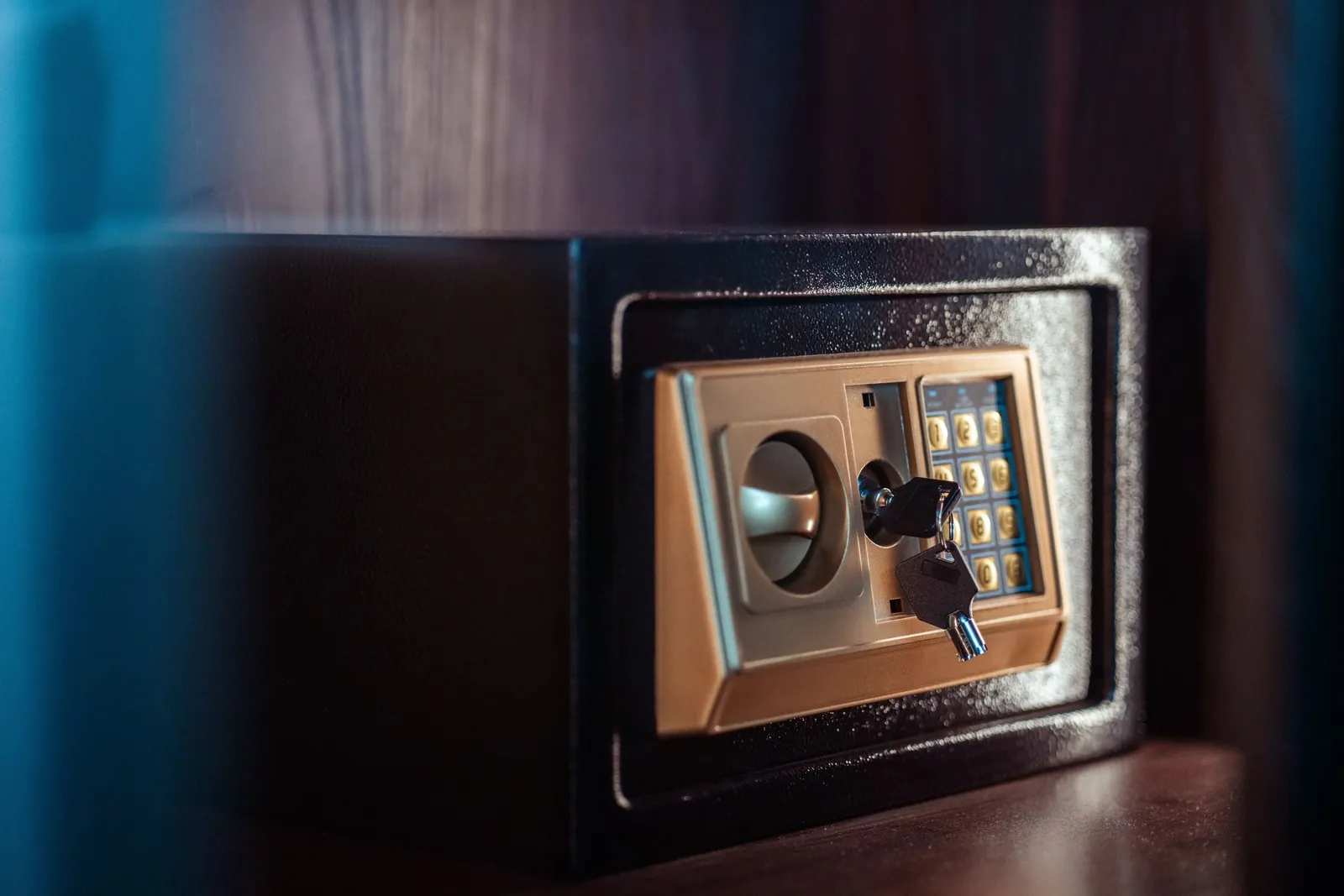
- Electronic keypad. Buttons and a small display or lights. The most common lock on home safes sold today.
- Mechanical dial. A round dial with numbers. Older safes, and many better ones, still use these.
- Key lock. Common on small fire boxes and document chests.
- Keypad with an override key. Many consumer safes pair a keypad with a hidden keyhole as a backup.
Find the make and model if you can. It is usually on a label inside the door, which does not help right now, but often on the back, the bottom, or the original box and paperwork too.
Keypad safe: try the battery before anything else
A keypad that stays dark, flickers or beeps without opening is usually a battery problem, not a broken safe.
- Find the battery. On many keypad safes the battery sits behind the keypad on the outside of the door, so you can change it with the safe still locked. Some have small external terminals for holding a battery against them to power the lock while you enter the code. The manual, or the manufacturer's site with the model number, will show which one you have.
- Use a fresh battery of the right type. A half-used one from the drawer is a false test.
- Stop after a few wrong codes. Many electronic locks shut out all entries for a while after several wrong tries. Punching codes during that period only restarts it. Wait, then try once, carefully.
- Look for the override keyhole. On many consumer safes it hides behind a logo plate or a small cap near the keypad. The key usually came taped inside the paperwork, which is why it is so often missing.
If the keypad lights up, beeps normally and still refuses your code, the code was probably changed or misremembered. Move on to the next section.
Dial safe: the combination nobody wrote down
With a dial lock, a lot of "forgotten" combinations are really dialing errors. Most dial locks need the dial turned a set number of times in alternating directions before each number, and the count matters. If you have the combination written somewhere, find the instructions for that lock and try again slowly.
If the combination is truly gone, the manufacturer may be able to help. Some safe makers can supply a combination or an override key from the serial number, once you prove ownership, often with a notarised form. It takes paperwork and some waiting, but it costs the safe nothing.
What never to do
- Do not pry or hammer the door. You will damage the door and the bolts long before you open it.
- Do not drill it yourself. Better safes have relockers, hidden mechanisms that fire when the lock is attacked and hold the bolts shut even after the right code goes in. A fired relocker turns a routine opening into a much bigger job.
- Do not drill a fire safe at random. The walls hold insulation that protects papers from heat. A hole in the wrong place compromises that.
What a safe technician does
A typical call starts with questions on the phone: the make and model, the type of lock, where the safe is, and what happens when you try to open it. That tells the technician whether it is likely to be a power problem, a lock fault, or a lost combination.
On site, the order is usually least damage first.
- Power and override. Check the battery and wiring on a keypad lock, and try any override.
- Manipulation. On many mechanical locks, a trained technician can find the combination by feel and sound, working the dial and reading the wheels inside. It takes patience, and it leaves the safe untouched.
- Drilling, if it comes to that. A small hole at a precise point lets the technician see or move the lock mechanism. Done properly, the hole is then repaired and the lock is reset or replaced, and the safe stays usable.
Afterwards, set a new code, put in a fresh battery, and write down where the override key and the paperwork live. Safe opening and repair is one of our services, set out on the safe opening and repair page. Every safe is different, so call with the make and model and ask whether yours is a good fit.
Proof of ownership
Expect to be asked for it. A technician who opens a safe for whoever asks is opening safes for burglars too. Photo ID with the address of the house is the usual start. For a safe you inherited, or one left behind in a house you bought, the closing papers or estate documents help.
Inherited, moved-in and broken-into safes
Safes outlast their owners' memories. A common situation is a safe that came with a house, or one in a parent's closet with no combination in sight. Ask the seller or the family first. If the code is gone, the manufacturer and then a technician are the options, in that order.
If someone has tried to force your safe during a break-in, do not keep trying the code on a damaged lock. Have it looked at, and deal with the doors at the same time. Here is what to do about changing locks after a break-in.
Scarsdale, Rye and the rest of the county
Scarsdale is mostly large single-family houses, the kind with a safe bolted in a closet or the basement and paperwork filed somewhere else entirely. If you need a Scarsdale locksmith for a safe that will not open, start with the battery and the override, then call.
Rye sits on the Sound a few miles past Mamaroneck, an easy run from the two technicians based at home in Larchmont. For a locksmith in Rye, the same advice applies: try the cheap fixes, then call with the make and model.
For the full list of places we serve, see the Westchester towns we cover.
Frequently asked questions
Can a safe be opened without damaging it?
Often, yes. A dead battery, an override key or manipulation of a mechanical lock can all open a safe without harm. Drilling is a last resort, and when it is done properly the hole is repaired and the safe stays usable.
My keypad safe is completely dead. Is it broken?
Usually not. A dark keypad nearly always means a dead battery. On many safes the battery is reachable from outside the locked door, or there are external terminals to power the lock while you enter the code.
Can the manufacturer give me my safe combination?
Some can, from the serial number, once you prove you own the safe. Expect a form, often notarised, and some waiting. Check the manufacturer's site for your model.
What do I need to show to have a safe opened?
Photo ID with the address where the safe is, at a minimum. For an inherited safe or one left in a house you bought, bring the estate or closing papers. A technician who does not ask is not one you want.
Locked out of a safe anywhere in Westchester? Call (914) 255-6611 with the make and model.