
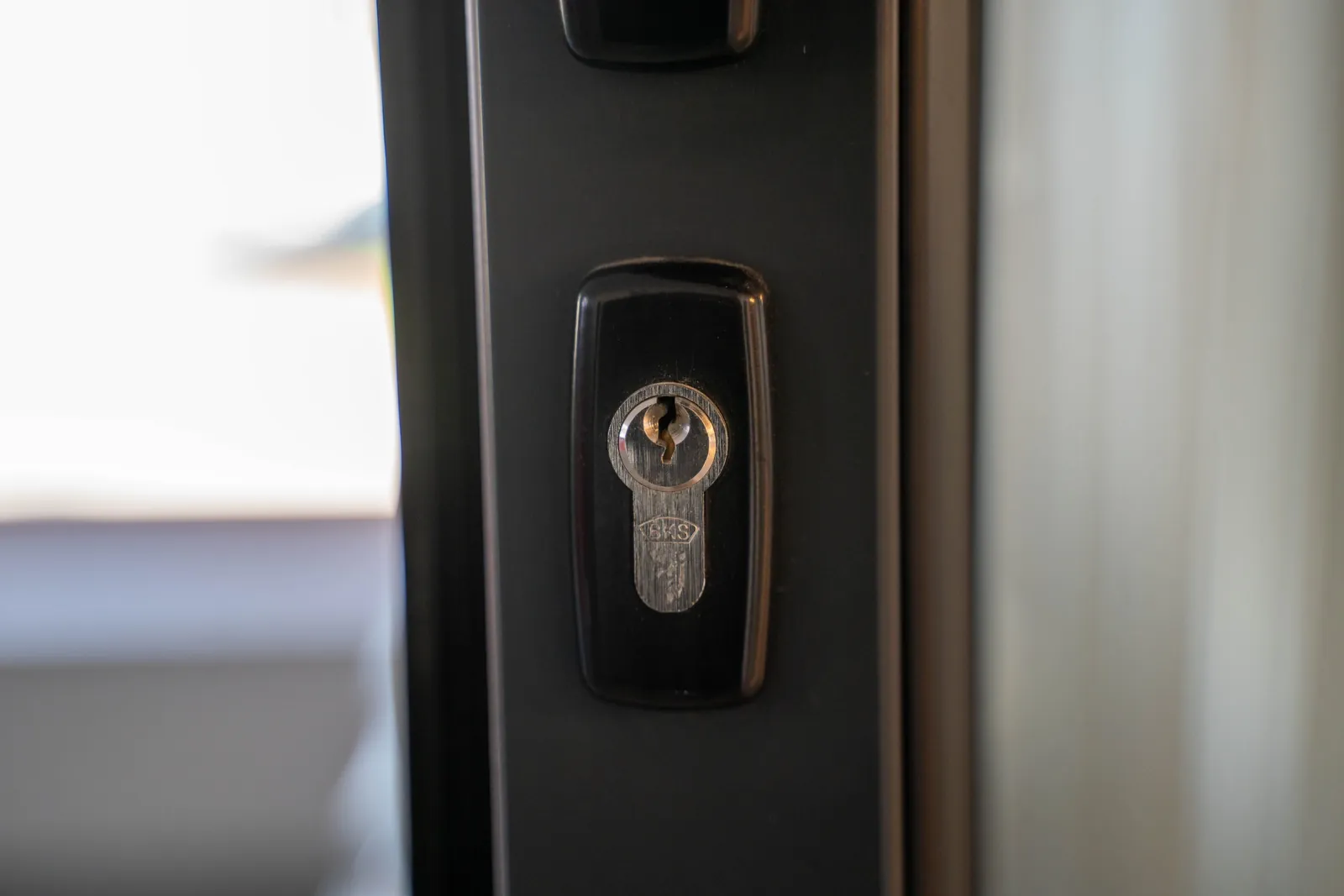
Commercial Locksmith White Plains: Master Key Systems
For most White Plains offices, the lock question is not which brand to buy but who holds which key. A master key system lets one key open every door while each employee's key opens only the doors they need. It works well when it is planned on paper first and every key is tracked. When staff turn over often, when keys keep going missing, or when you need a record of who came in after hours, card or fob access control usually beats keys.
How a master key system works
A pin tumbler cylinder opens when the key lifts each pin to one exact height. In a master-keyed cylinder, small extra pins (master pins) give each chamber a second correct height. One key lines the pins up at the first height, a different key at the second, and both open the lock.
Stack that across a building and you get a hierarchy:
- Change key. Opens one door, or one small set of doors.
- Master key. Opens a group of doors, such as one floor or one department.
- Grand master key. Opens everything in the system.
Picture a professional office suite in downtown White Plains: a reception door, partners' offices, a file room, a server closet, a supply room and a kitchen. The partners carry a key that opens all of it. Each staff member's key opens the front door and their own office. The IT contractor's key opens the server closet and nothing else. The cleaning crew's key opens the front door and the kitchen.
The document that makes this possible is the key schedule, sometimes called the bitting list. It records which cuts open which doors. Treat it like the alarm codes: one copy, locked away, known to very few people.
The trade-off most people are never told
Every master pin creates an extra way for a cylinder to open. A master-keyed lock is therefore somewhat easier to pick than the same lock without master pins, and a badly planned system can let a key open a door it was never meant to. The deeper the hierarchy, the more of these extra openings exist.
There is a second weakness. Someone with one change key, a supply of blanks and time alone with a lock can, with some skill, work out the cuts of the master key. Restricted keyways make that much harder, because the blanks are not sold to the public.
Two rules follow. Keep the hierarchy as shallow as the business allows. And for any system with more than a handful of keys, put it on a restricted or high-security keyway. Our high-security lock page explains what that adds.
Key control after staff turnover
A master key system is only as good as the record of who holds which key. Offices lose control slowly, one departure at a time.
- Keep a key log. Key number, holder, door group, date issued, date returned. Make returning keys part of the exit checklist, next to returning the laptop.
- Stamp keys with a code, not a door name. A key stamped "server" tells whoever finds it what to try.
- Do not rely on "Do Not Duplicate." That stamp is a request, not a barrier, and plenty of key counters ignore it. A restricted keyway is the barrier.
- Know what a lost key exposes. A lost change key means rekeying the doors it opens. A lost master key means every lock under that master is exposed. A lost grand master means the whole system.
This is where interchangeable cores earn their place. In a lock built for them, the whole keyed core slides out with a special control key, and a new core, already pinned to a new key, slides in. Both small-format and large-format cores exist. For an office with steady turnover, swapping cores is much faster than taking each lock apart on site. Where the locks take ordinary cylinders, rekeying the affected doors does the same job one cylinder at a time.
Office towers: read the lease before you change a lock
Many White Plains offices sit in downtown towers, and in a multi-tenant building the suite entry door often belongs to the building's system, not yours. Building management usually holds a master for engineers, cleaners and emergency access. Before changing the lock on a suite door, read the lease and ask management. Many buildings need a copy of any new key, or require a specific keyway so their master still works.
Inside the suite, the interior doors are often yours to key as you like. That split is common: the building controls the front door, the tenant runs its own small master system behind it.
Other White Plains setups follow the same logic at a smaller scale. A shop on Mamaroneck Avenue has a street door, a back service door and an office. A practice within walking distance of the county courthouse has a front door, a records room and a few private offices. Our post on storefront locks in Port Chester covers retail doors and roll-down gates in more detail.
When access control makes more sense
Keys still suit plenty of small offices. Card, fob or phone access control starts to win when several of these are true:
- More than a handful of people need access, and staff change often.
- Keys keep going missing.
- You need to know who opened which door and when.
- Cleaners, contractors or IT staff come in after hours.
- The business has more than one location.
With access control, a lost card is deleted at a desk in seconds and nobody touches a lock. Doors can follow a schedule, open during reception hours and locked after. Every entry is logged.
Two things to plan for. First, every reader-controlled door still has a mechanical override cylinder for when the power or the system fails. Put it on a restricted key held by very few people, or it becomes the easy way in. Second, electric strikes and magnetic locks come in fail-safe (unlocks when power is lost) and fail-secure (stays locked) versions. Doors on exit routes and stairwells have their own fire code requirements about free exit, and building management and the fire code decide those, not the tenant.
Many offices end up with a hybrid: a reader on the suite entry, where turnover matters most, and master-keyed mechanical locks on the interior doors.
Where to start
A typical first conversation with a White Plains office manager involves a drawer of unlabelled keys, an employee who left without handing one back, and a lease that says the building needs a copy of any new key. The right first step is not choosing hardware. It is a list of every door, who needs it, and who must not have it. The system follows from that list.
Larchmont Locksmith NY sets up commercial lock systems, including master key systems and access control, for businesses across Westchester. Our three technicians live in Larchmont and at the edge of the Bronx. See our White Plains locksmith page for the work we do in the city. Landlords managing small residential buildings may also find our guide to rekeying between tenants useful, since the same master key logic applies.
Frequently asked questions
How many levels should an office master key system have?
As few as the business needs. A small office usually needs one master key over a set of change keys. A grand master level makes sense when there are several suites or departments. Every extra level adds keys that open more doors and makes the system easier to compromise.
What happens if someone loses the master key?
Every lock under that master is exposed and should be rekeyed or fitted with new cores. Interchangeable cores make this much faster. Keep the key schedule current so you know exactly which doors a lost key reached.
Can I change the lock on my office suite door myself?
In a multi-tenant building, check your lease and ask building management first. Many buildings keep their own master on suite doors for building staff and emergency access, and a new lock that ignores it can put you in breach of the lease.
Is access control more secure than keys?
Not automatically. Its advantage is control and a record: a lost card is deleted instantly and every entry is logged. It still depends on a mechanical override key, which needs the same tight key control as any master key.
To plan a master key system or move an office to access control, call (914) 255-6611 or send the details through the quote form on the site.