Can a Locksmith Make a Key Without the Original Key?
Yes, for most locks. A locksmith can make a new key without the original by reading the lock itself: taking the cylinder apart and measuring the pins, or fitting a blank in the keyway and filing it until it turns. Some locks and keys also carry a code that gives the cuts directly. For many cars, the cut can be found from the vehicle and the new key then programmed to it. Expect to prove the house or car is yours. And if the original was lost rather than never handed over, rekeying is often the simpler answer, because a new key for the old pins means the lost key still works.
Three ways to make a key without the original
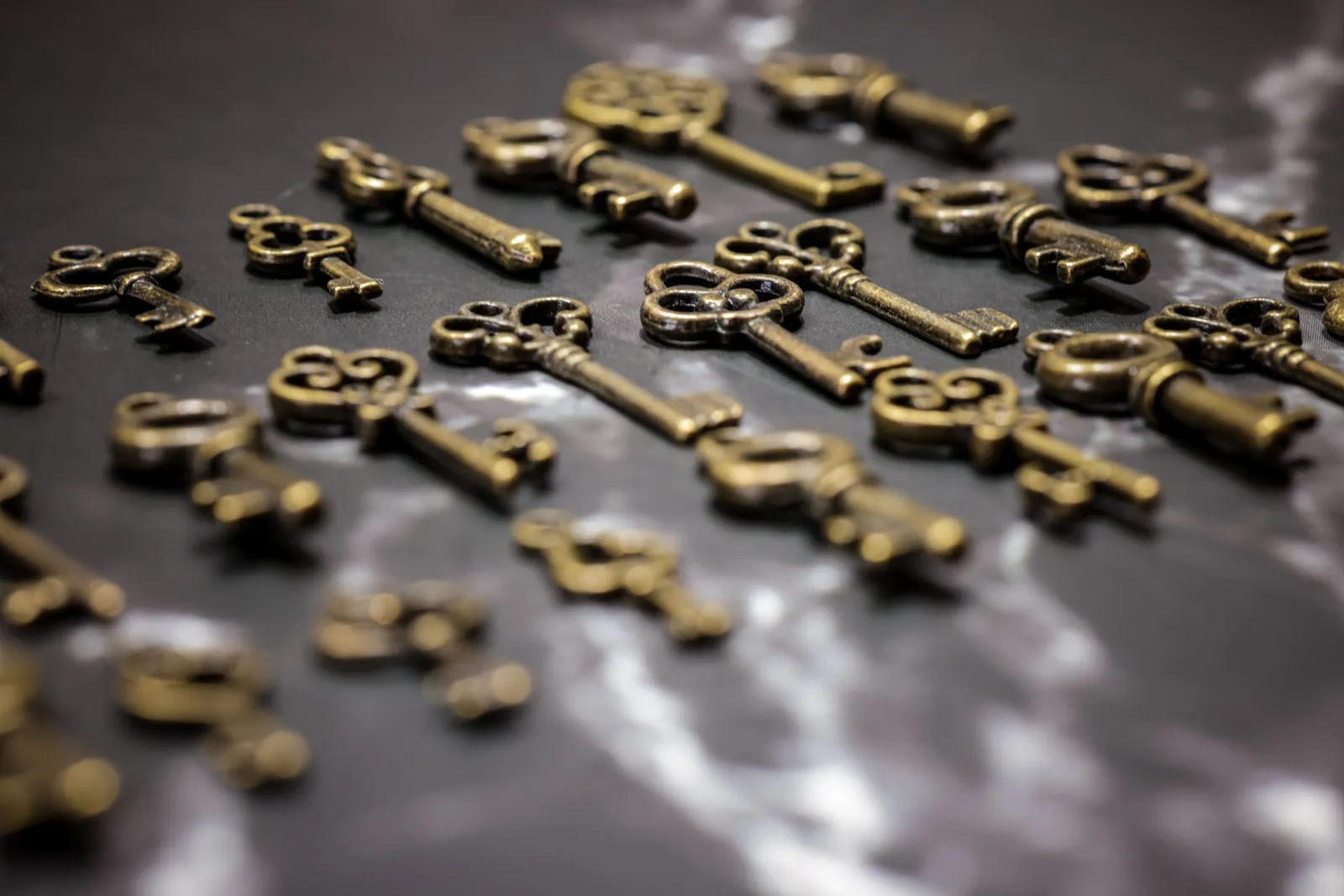
The cuts on a key are just a set of depths, one for each pin in the lock. Find the depths and you can cut the key. There are three usual ways to find them.
From a key code
Many locks have a code that describes the cuts. It may be stamped on the original key, printed on a tag or card that came with the lock, or kept on file by the dealer for high-security systems. With the code, a key can be cut on a code machine without touching the lock. The catch is that most people never kept the tag, and plenty of locks have no recorded code at all.
By decoding the lock
This is the most common method on a house lock. The cylinder comes out of the door, the plug comes out of the cylinder, and the pins are measured. A key is cut to those measurements and tested. If the door is locked at the time, it has to be opened first, which is a lockout before it is a key job.
By impressioning
A blank goes into the keyway and is worked gently against the pins, which leave tiny marks where the key needs cutting. The blank is filed at each mark, tried again, and filed again, until it turns. It takes skill and patience, and it leaves the lock in the door untouched. It is less common than decoding, but it is useful when a lock is hard to remove.
When rekeying is the better answer
Making a key to the old pins is the right job when there was never a key to lose: a back door nobody had a key for when you moved in, a closet lock, an old cabinet. It is the wrong job when the original is lost somewhere out in the world. In that case a new key for the old lock still leaves the lost key working.
Lock rekeying solves both problems at once. The cylinder is opened anyway, so instead of measuring the old pins, a new set goes in and new keys are cut to match. You get working keys, and the missing one stops opening your door. Rekeying is also when several doors can be put on one key, as long as the locks share a keyway.
Our guide to what to do after losing your house keys covers the decision in more detail, including what on the key ring makes a rekey urgent.
If you have any working copy at all, the simplest route is to copy it. Most standard house keys can be copied at a key counter. The exception is a restricted high-security key, covered below.
Cars are a different job
A car key has up to three parts, and each has to be made without the original.
- The blade. For many cars, the cut can be found from the key code linked to the vehicle, through the manufacturer, which is one reason proof of ownership matters. On some cars the door lock or ignition can also be decoded, much like a house lock.
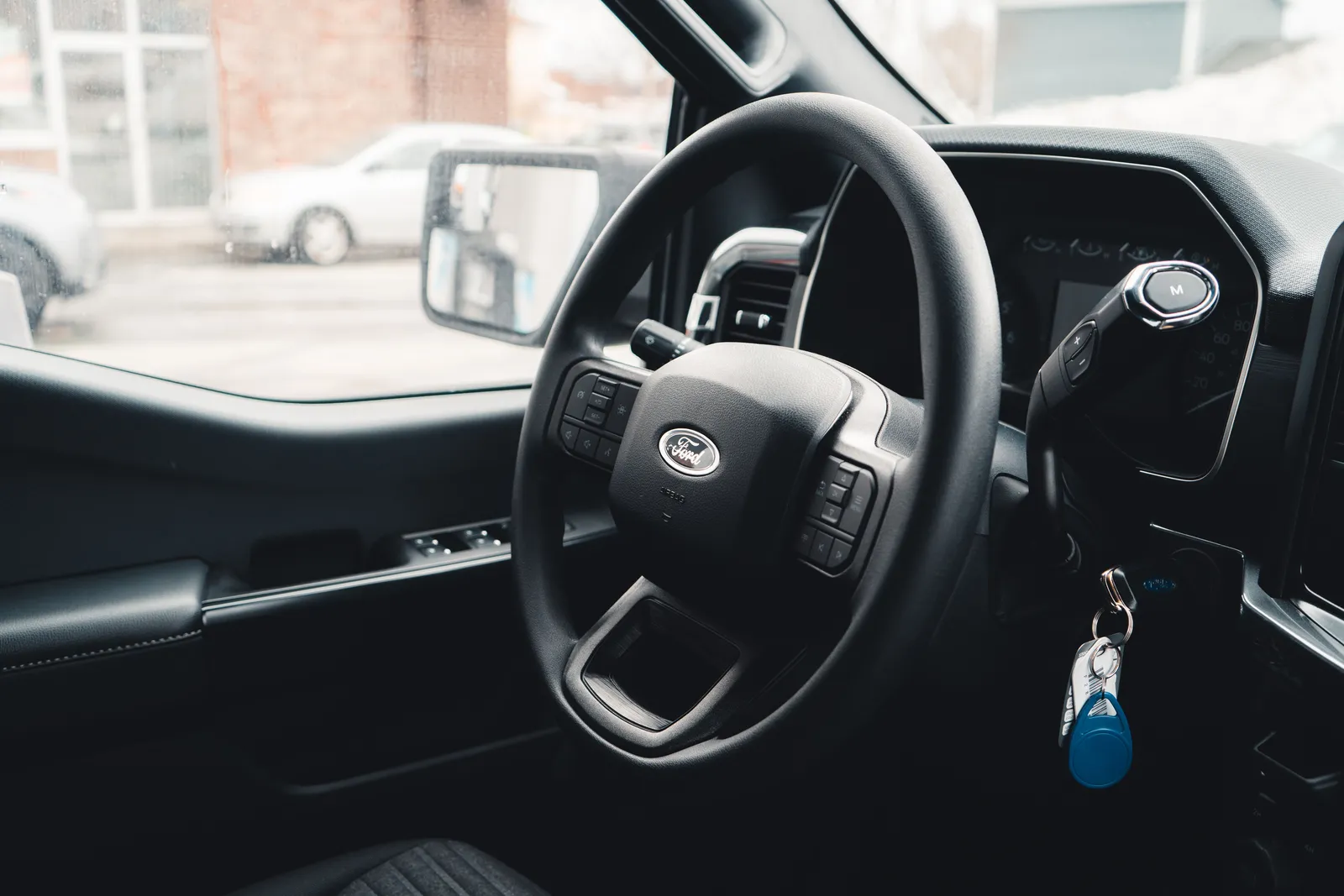
- The transponder chip. Most cars from the last couple of decades will not start unless the chip in the key is programmed to the car. A cut key with no programming opens the door and nothing else.
- The remote or smart key. Fobs and push-to-start keys need programming equipment that talks to the car.
Making a key when every key is gone is more work than copying a spare, because the car has to accept a key it has never seen. Car key replacement covers cutting and programming. Have the make, model, year and VIN ready, along with the registration and your ID. Our guide to car keys, fobs and smart keys explains the key types and the dealer versus locksmith choice.
Proof that it is yours
A key made for a door you cannot open is the same as being let in. So a careful locksmith asks for proof first, and you should be wary of one who does not.
- For a house: a driver's license with the address, or a lease, a deed or a utility bill in your name. A phone screen is usually fine.
- For a car: the registration or title, and an ID that matches it.
- For a rental: the lease, and possibly the landlord's agreement, since the lock may belong to the building.
If your wallet is missing along with the keys, say so on the phone. Having nothing to show is a problem to solve before anyone arrives, not on your doorstep.
Locks where it is harder, or a different job
- Restricted high-security keys. Many high-security locks use key blanks that only an authorised dealer can supply, often only to the person named on the owner's card. That is the point of them. A general key counter cannot copy one, and a new key may need to go through the dealer.
- Smart locks. Codes and app users are reset rather than cut. Most smart locks still have a backup key cylinder, and that cylinder can be decoded or rekeyed like any other.
- Older houses. Interior doors in older houses often have simple warded locks that take a skeleton-style key, and those are easy to fit. The entry door mortise lock usually has a separate cylinder that screws in, and that cylinder is decoded or rekeyed on its own.
- Safes. A safe with a lost key is a safe-opening job, not a key-cutting one. See our safe opening and repair service.
Pelham and Pelham Manor
The Town of Pelham holds two villages, Pelham and Pelham Manor, and Pelham Manor borders the Bronx at Pelham Bay Park. The Pelham station is on the New Haven Line, and the Hutchinson River Parkway runs through the town. One of our three technicians lives at the edge of the Bronx, which puts Pelham close to home for him.
A typical call there looks like this: someone has lived in a house for a while, has always used the front door, and finds that nobody ever had a key to the side door or the basement. That is the classic "make a key without the original" job, and also a chance to put every door on one key. The Pelham locksmith page covers both villages.
Frequently asked questions
Can a locksmith make a key just from the lock?
Usually, yes. The cylinder can be taken apart and the pins measured, or a blank can be impressioned in place. Either way you end up with a key that fits the lock as it is.
Is it better to make a key to the old lock or to rekey it?
If the original was lost and could be found by someone else, rekey, so the lost key stops working. If there was never a key in anyone else's hands, making a key to the existing pins is fine. Ask for the total for each before deciding.
Can I get a car key made if I lost every key?
For most cars, yes. It takes more work than copying a spare, because the blade has to be cut and the chip or fob programmed to the car. Have the VIN, the registration and your ID ready.
Can any locksmith copy a high-security key?
Not a restricted one. Those blanks are controlled, and copies usually go through an authorised dealer and the person named on the owner's card. A standard house key, by contrast, can be copied almost anywhere.
To have a key made for a lock with no original, or to rekey instead, call Larchmont Locksmith NY at (914) 255-6611 any hour.